
Self-Service BI: The Definitive 2026 Guide to Data Autonomy

Self-service BI has evolved from a niche capability into a core strategic imperative for modern enterprises in 2026. This guide provides a definitive framework for understanding its shift from rigid, dashboard-centric tools to fluid, conversational analytics platforms. We will dissect the historical limitations that created data bottlenecks, explore the paradigm shift driven by AI and collaborative interfaces, and offer a concrete blueprint for architecting a truly democratized data culture. The focus is no longer on simply providing access to data, but on empowering every team member to ask questions, interrogate insights, and make decisions in a shared, governed environment, ultimately transforming business intelligence from a reporting function into a dynamic conversation that drives growth.
The Promise and Peril of Self-Service BI: A 2026 Retrospective
For over a decade, the term "self-service BI" painted a picture of business users freely exploring data and unearthing game-changing insights without needing a data analyst. The reality, however, was often a story of unfulfilled potential, hidden costs, and frustrated teams. To build a successful future, we must first understand the foundational cracks of the past.
The First Wave: The Dashboard Revolution and Its Glass Ceiling
The initial wave of self-service BI, championed by platforms like Tableau and Power BI, was revolutionary. It liberated data from the confines of static spreadsheets and placed it into interactive, visual dashboards. For the first time, executives could see sales trends, marketing performance, and operational metrics updated in near real-time. The promise was immense: data at everyone's fingertips.
However, this revolution had a glass ceiling. These tools democratized the *viewing* of pre-defined metrics, but not the *interrogation* of the underlying data. Business users could filter and slice within the rigid confines of a dashboard, but the moment a new, unanticipated question arose—"Why did our customer churn spike in the Midwest last quarter specifically among enterprise clients?"—they hit a wall. Answering that question required modifying the core query or data model, a task that sent them straight back to the IT or data team, defeating the entire purpose of self-service.
The Hidden Costs of Traditional Self-Service
Beneath the surface of glossy dashboards, traditional self-service BI created significant organizational friction and hidden costs. The most prominent issues included:
The Data Literacy Gap: Handing a complex tool to someone without deep analytical training doesn't automatically make them an analyst. Without understanding statistical significance, correlation vs. causation, or data modeling, users could easily misinterpret visualizations and make poor, data-informed decisions.
The Maintenance Burden: The proliferation of dashboards led to the rise of "dashboard graveyards"—countless reports built for a single purpose, then abandoned. Data teams spent an inordinate amount of time maintaining, validating, and troubleshooting this sprawling ecosystem of often-redundant assets.
The Risk of Inconsistency: When multiple users or departments build their own reports from the same data sources, they often arrive at different answers to the same question. Varying definitions of "active user" or different logic for calculating customer lifetime value created a cacophony of conflicting truths, eroding trust in data across the organization.
Why 'Self-Service' Often Meant 'Self-Suffering'
From the business user's perspective, the experience was far from empowering. The drag-and-drop interfaces, while simpler than writing SQL, still required a steep learning curve and a mental model of how the database tables were joined. The process was intimidating and inefficient. This friction meant that for any question of genuine consequence, the path of least resistance was to file a ticket with the data team. The result was a vicious cycle: business users felt disempowered, and data teams became perpetual ticket-takers, bottlenecking critical decisions and preventing them from focusing on more strategic, high-impact analysis.
The Paradigm Shift: From Visualizations to Conversations
The limitations of the first wave of self-service BI set the stage for a fundamental shift in how we interact with data. The evolution of large language models (LLMs) and a renewed focus on collaboration have created a new paradigm in 2026—one that moves beyond building and viewing, into a realm of asking and understanding.
The AI Catalyst: How LLMs Redefined the Data Interface
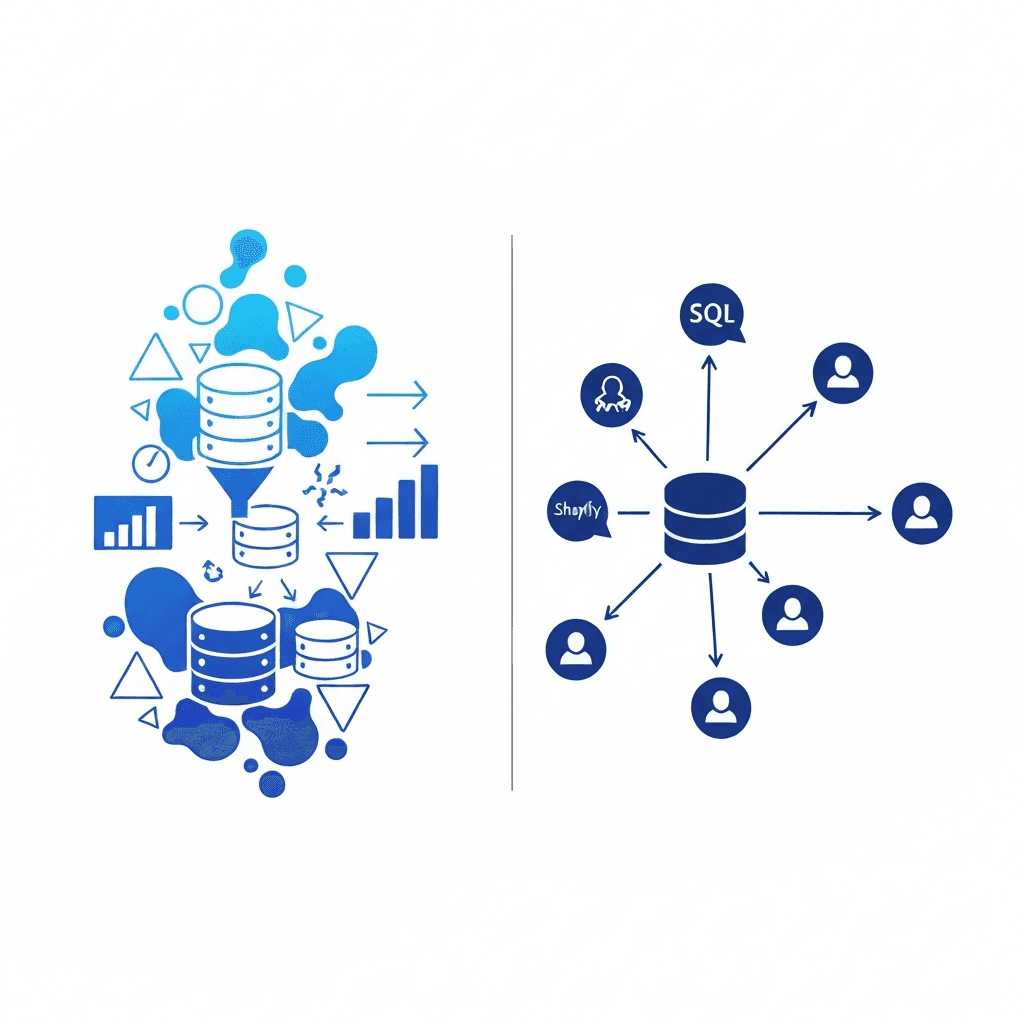
The true breakthrough in self-service came when the primary interface for data analysis changed from a visual canvas to a conversational one. Advanced LLMs, trained on the nuances of both human language and data query languages like SQL, became the ultimate translator. A business leader no longer needs to know which tables to join or which fields to drag. They can simply ask a question in plain English: "Compare our monthly recurring revenue from the Shopify channel to our HubSpot-attributed leads over the last six months."
SME Insight: The goal of modern self-service BI isn't to turn every marketing manager into a data analyst. It's to give that marketing manager the power of a senior data analyst, on-demand, through a simple conversational interface. It's about access to answers, not access to tools.
This shift to conversational analytics finally delivers on the original promise of self-service by removing the technical barrier entirely. The user's expertise is in their business domain, and they can now apply that expertise directly without needing to become a BI tool expert first.
Moving Beyond Dashboards: The Rise of the Collaborative Canvas
The second pillar of the modern BI paradigm is the move from isolated dashboards to a shared, live workspace—the Collaborative Canvas. Static dashboards are a one-way communication medium; they present information but don't facilitate discussion or action around it. A collaborative canvas, by contrast, is a multiplayer environment for data.
Imagine a product manager notices a drop in user engagement. On a collaborative canvas, they can pull up the relevant chart by asking a question, tag the lead engineer directly on an anomaly in the data, and start a discussion thread to brainstorm causes. The engineer can then pull in performance data from a different source into the same view, and a marketing lead can overlay a recent campaign launch. The insight, context, and subsequent action plan all live in one unified, persistent space, eliminating the need for endless Slack threads and screenshot sharing.
True Democratization: When 'Asking' Replaces 'Building'
This convergence of conversational AI and collaborative workspaces represents the true democratization of data. It's a system designed around the natural workflow of teams—identifying a problem, asking questions, collaborating on a solution, and executing a plan. The technology fades into the background, becoming a seamless enabler of curiosity and decisive action rather than a complex obstacle to be overcome.
Architecting a Modern Self-Service BI Ecosystem
Implementing a successful self-service BI culture in 2026 goes beyond just purchasing a new tool. It requires a thoughtful approach to data architecture, governance, and cultural change. This four-step framework provides a roadmap for building an ecosystem that fosters trust, agility, and genuine empowerment.
Step 1: Unifying Your Data Stack (Without the Headache)
Your business runs on a multitude of platforms: Shopify for sales, HubSpot for marketing, Postgres for your product, Linear for engineering. A modern self-service platform must connect to all of them effortlessly. The goal is to create a single access point for inquiry without engaging in a massive, multi-year data warehousing project. Look for platforms with a wide array of pre-built connectors that can be authenticated in minutes, allowing you to query data where it lives and blend insights from across the business.
Step 2: Establishing a 'Single Source of Truth' with Analytical Recipes
Freedom of inquiry can lead to chaos without a foundation of trust. How do you ensure everyone is calculating key metrics the same way? The answer lies in governed, reusable logic. Modern platforms use a concept like Analytical Recipes—pre-built, vetted models for complex, business-critical calculations. For example, the data team can define a single, official recipe for "Customer Lifetime Value" that correctly accounts for refunds, cohort definitions, and cost of goods sold. When a business user asks a question about LTV, the platform uses this trusted recipe, ensuring every answer is accurate and consistent, building confidence in the system.
Step 3: Fostering a Culture of Curiosity, Not Complexity
The most powerful tool is useless if your team is afraid to use it. Leadership must champion a cultural shift away from viewing data as the domain of a specialized few. Encourage teams to ask "what if" questions. Celebrate when insights—even small ones—are discovered and shared via the collaborative canvas. The focus should be on the quality of the questions being asked, not on who can build the most complex chart. This shift moves the data team from gatekeepers to strategic enablers, helping teams formulate better questions.
Step 4: Grounding Analysis in a Northstar Metric
To prevent analysis paralysis, it's critical to align self-service BI efforts with the company's most important strategic goal. This is achieved by grounding every conversation in your Northstar Metric. A modern BI platform should keep this core metric front and center, helping teams understand how their local questions and insights contribute to the overarching mission. When a product team investigates a feature's adoption rate, they should be able to instantly see how that impacts the Northstar Metric, ensuring that all data exploration is purposeful and strategically aligned.
Evaluating Self-Service BI Platforms in 2026: A New Scorecard
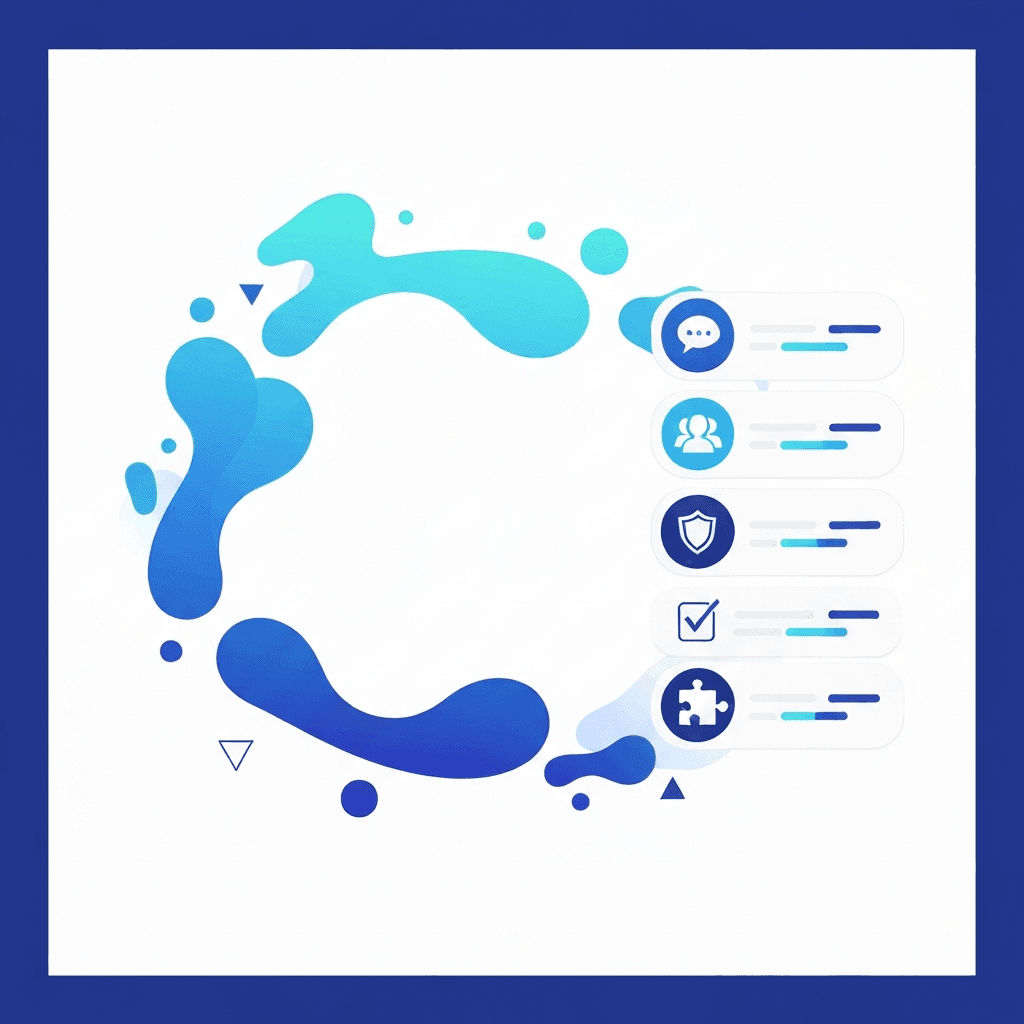
The criteria for selecting a BI platform have fundamentally changed. The old checklist of supported chart types and data sources is now just table stakes. A 2026 evaluation requires a focus on the user experience, collaborative capabilities, and the underlying governance that makes true self-service possible.
Usability: Is it Truly Conversational? Test the platform with your least technical team members. Can they ask a multi-faceted business question using natural language and get an accurate, useful answer in seconds? The benchmark is no longer "ease of use" but "zero learning curve."
Collaboration: Does it Break Down Silos? Assess the platform's ability to function as a multiplayer tool. Can users tag each other, create discussion threads on specific data points, and build a shared knowledge base of insights? Does it integrate with your existing workflows in tools like Slack or Linear?
Governance & Trust: Is the Freedom Guided? How does the platform ensure data accuracy and consistency? Look for features like certifiable data sources, reusable analytical models (recipes), and clear data lineage. The platform must provide guardrails that give data teams peace of mind while giving business users maximum freedom.
Integration: Does it Connect to Your Entire Stack? The platform must be able to ingest data from every critical system you use. A limited set of connectors will only create a new data silo. Ensure it can connect to both cloud applications and internal databases with minimal engineering effort.
The Future of Self-Service: Predictive, Proactive, and Personal
The journey of self-service BI is far from over. The current conversational paradigm is a massive leap forward, but the horizon holds even more promise. The future of data interaction will be defined by systems that are not just responsive, but proactive and predictive.
Proactive Insights: Your Data Finding You
The next evolution will involve AI that doesn't wait to be asked. Systems will monitor key metrics and underlying drivers, automatically surfacing significant changes or potential opportunities directly to the relevant stakeholders. Instead of a product manager needing to ask why engagement is down, they will receive an alert: "Engagement from new users in Germany dropped by 15% yesterday. This coincides with a 50ms increase in app load time for that region."
The End of the Data Request Ticket
Ultimately, this new paradigm achieves the original goal of self-service BI: it liberates the data team. By empowering business users to answer the vast majority of their own questions, data professionals can finally shift their focus from reactive report-building to proactive, strategic work. They can focus on building more sophisticated data models, exploring untapped data sources, and partnering with leadership on forward-looking initiatives. The data request ticket may never disappear entirely, but its role will be relegated to the truly novel and complex, marking the success of a truly self-sufficient data culture.
Self-service BI has evolved from a niche capability into a core strategic imperative for modern enterprises in 2026. This guide provides a definitive framework for understanding its shift from rigid, dashboard-centric tools to fluid, conversational analytics platforms. We will dissect the historical limitations that created data bottlenecks, explore the paradigm shift driven by AI and collaborative interfaces, and offer a concrete blueprint for architecting a truly democratized data culture. The focus is no longer on simply providing access to data, but on empowering every team member to ask questions, interrogate insights, and make decisions in a shared, governed environment, ultimately transforming business intelligence from a reporting function into a dynamic conversation that drives growth.
The Promise and Peril of Self-Service BI: A 2026 Retrospective
For over a decade, the term "self-service BI" painted a picture of business users freely exploring data and unearthing game-changing insights without needing a data analyst. The reality, however, was often a story of unfulfilled potential, hidden costs, and frustrated teams. To build a successful future, we must first understand the foundational cracks of the past.
The First Wave: The Dashboard Revolution and Its Glass Ceiling
The initial wave of self-service BI, championed by platforms like Tableau and Power BI, was revolutionary. It liberated data from the confines of static spreadsheets and placed it into interactive, visual dashboards. For the first time, executives could see sales trends, marketing performance, and operational metrics updated in near real-time. The promise was immense: data at everyone's fingertips.
However, this revolution had a glass ceiling. These tools democratized the *viewing* of pre-defined metrics, but not the *interrogation* of the underlying data. Business users could filter and slice within the rigid confines of a dashboard, but the moment a new, unanticipated question arose—"Why did our customer churn spike in the Midwest last quarter specifically among enterprise clients?"—they hit a wall. Answering that question required modifying the core query or data model, a task that sent them straight back to the IT or data team, defeating the entire purpose of self-service.
The Hidden Costs of Traditional Self-Service
Beneath the surface of glossy dashboards, traditional self-service BI created significant organizational friction and hidden costs. The most prominent issues included:
The Data Literacy Gap: Handing a complex tool to someone without deep analytical training doesn't automatically make them an analyst. Without understanding statistical significance, correlation vs. causation, or data modeling, users could easily misinterpret visualizations and make poor, data-informed decisions.
The Maintenance Burden: The proliferation of dashboards led to the rise of "dashboard graveyards"—countless reports built for a single purpose, then abandoned. Data teams spent an inordinate amount of time maintaining, validating, and troubleshooting this sprawling ecosystem of often-redundant assets.
The Risk of Inconsistency: When multiple users or departments build their own reports from the same data sources, they often arrive at different answers to the same question. Varying definitions of "active user" or different logic for calculating customer lifetime value created a cacophony of conflicting truths, eroding trust in data across the organization.
Why 'Self-Service' Often Meant 'Self-Suffering'
From the business user's perspective, the experience was far from empowering. The drag-and-drop interfaces, while simpler than writing SQL, still required a steep learning curve and a mental model of how the database tables were joined. The process was intimidating and inefficient. This friction meant that for any question of genuine consequence, the path of least resistance was to file a ticket with the data team. The result was a vicious cycle: business users felt disempowered, and data teams became perpetual ticket-takers, bottlenecking critical decisions and preventing them from focusing on more strategic, high-impact analysis.
The Paradigm Shift: From Visualizations to Conversations
The limitations of the first wave of self-service BI set the stage for a fundamental shift in how we interact with data. The evolution of large language models (LLMs) and a renewed focus on collaboration have created a new paradigm in 2026—one that moves beyond building and viewing, into a realm of asking and understanding.
The AI Catalyst: How LLMs Redefined the Data Interface
The true breakthrough in self-service came when the primary interface for data analysis changed from a visual canvas to a conversational one. Advanced LLMs, trained on the nuances of both human language and data query languages like SQL, became the ultimate translator. A business leader no longer needs to know which tables to join or which fields to drag. They can simply ask a question in plain English: "Compare our monthly recurring revenue from the Shopify channel to our HubSpot-attributed leads over the last six months."
SME Insight: The goal of modern self-service BI isn't to turn every marketing manager into a data analyst. It's to give that marketing manager the power of a senior data analyst, on-demand, through a simple conversational interface. It's about access to answers, not access to tools.
This shift to conversational analytics finally delivers on the original promise of self-service by removing the technical barrier entirely. The user's expertise is in their business domain, and they can now apply that expertise directly without needing to become a BI tool expert first.

Moving Beyond Dashboards: The Rise of the Collaborative Canvas
The second pillar of the modern BI paradigm is the move from isolated dashboards to a shared, live workspace—the Collaborative Canvas. Static dashboards are a one-way communication medium; they present information but don't facilitate discussion or action around it. A collaborative canvas, by contrast, is a multiplayer environment for data.
Imagine a product manager notices a drop in user engagement. On a collaborative canvas, they can pull up the relevant chart by asking a question, tag the lead engineer directly on an anomaly in the data, and start a discussion thread to brainstorm causes. The engineer can then pull in performance data from a different source into the same view, and a marketing lead can overlay a recent campaign launch. The insight, context, and subsequent action plan all live in one unified, persistent space, eliminating the need for endless Slack threads and screenshot sharing.
True Democratization: When 'Asking' Replaces 'Building'
This convergence of conversational AI and collaborative workspaces represents the true democratization of data. It's a system designed around the natural workflow of teams—identifying a problem, asking questions, collaborating on a solution, and executing a plan. The technology fades into the background, becoming a seamless enabler of curiosity and decisive action rather than a complex obstacle to be overcome.
Architecting a Modern Self-Service BI Ecosystem
Implementing a successful self-service BI culture in 2026 goes beyond just purchasing a new tool. It requires a thoughtful approach to data architecture, governance, and cultural change. This four-step framework provides a roadmap for building an ecosystem that fosters trust, agility, and genuine empowerment.
Step 1: Unifying Your Data Stack (Without the Headache)
Your business runs on a multitude of platforms: Shopify for sales, HubSpot for marketing, Postgres for your product, Linear for engineering. A modern self-service platform must connect to all of them effortlessly. The goal is to create a single access point for inquiry without engaging in a massive, multi-year data warehousing project. Look for platforms with a wide array of pre-built connectors that can be authenticated in minutes, allowing you to query data where it lives and blend insights from across the business.
Step 2: Establishing a 'Single Source of Truth' with Analytical Recipes
Freedom of inquiry can lead to chaos without a foundation of trust. How do you ensure everyone is calculating key metrics the same way? The answer lies in governed, reusable logic. Modern platforms use a concept like Analytical Recipes—pre-built, vetted models for complex, business-critical calculations. For example, the data team can define a single, official recipe for "Customer Lifetime Value" that correctly accounts for refunds, cohort definitions, and cost of goods sold. When a business user asks a question about LTV, the platform uses this trusted recipe, ensuring every answer is accurate and consistent, building confidence in the system.
Step 3: Fostering a Culture of Curiosity, Not Complexity
The most powerful tool is useless if your team is afraid to use it. Leadership must champion a cultural shift away from viewing data as the domain of a specialized few. Encourage teams to ask "what if" questions. Celebrate when insights—even small ones—are discovered and shared via the collaborative canvas. The focus should be on the quality of the questions being asked, not on who can build the most complex chart. This shift moves the data team from gatekeepers to strategic enablers, helping teams formulate better questions.
Step 4: Grounding Analysis in a Northstar Metric
To prevent analysis paralysis, it's critical to align self-service BI efforts with the company's most important strategic goal. This is achieved by grounding every conversation in your Northstar Metric. A modern BI platform should keep this core metric front and center, helping teams understand how their local questions and insights contribute to the overarching mission. When a product team investigates a feature's adoption rate, they should be able to instantly see how that impacts the Northstar Metric, ensuring that all data exploration is purposeful and strategically aligned.

Evaluating Self-Service BI Platforms in 2026: A New Scorecard
The criteria for selecting a BI platform have fundamentally changed. The old checklist of supported chart types and data sources is now just table stakes. A 2026 evaluation requires a focus on the user experience, collaborative capabilities, and the underlying governance that makes true self-service possible.
Usability: Is it Truly Conversational? Test the platform with your least technical team members. Can they ask a multi-faceted business question using natural language and get an accurate, useful answer in seconds? The benchmark is no longer "ease of use" but "zero learning curve."
Collaboration: Does it Break Down Silos? Assess the platform's ability to function as a multiplayer tool. Can users tag each other, create discussion threads on specific data points, and build a shared knowledge base of insights? Does it integrate with your existing workflows in tools like Slack or Linear?
Governance & Trust: Is the Freedom Guided? How does the platform ensure data accuracy and consistency? Look for features like certifiable data sources, reusable analytical models (recipes), and clear data lineage. The platform must provide guardrails that give data teams peace of mind while giving business users maximum freedom.
Integration: Does it Connect to Your Entire Stack? The platform must be able to ingest data from every critical system you use. A limited set of connectors will only create a new data silo. Ensure it can connect to both cloud applications and internal databases with minimal engineering effort.
The Future of Self-Service: Predictive, Proactive, and Personal
The journey of self-service BI is far from over. The current conversational paradigm is a massive leap forward, but the horizon holds even more promise. The future of data interaction will be defined by systems that are not just responsive, but proactive and predictive.
Proactive Insights: Your Data Finding You
The next evolution will involve AI that doesn't wait to be asked. Systems will monitor key metrics and underlying drivers, automatically surfacing significant changes or potential opportunities directly to the relevant stakeholders. Instead of a product manager needing to ask why engagement is down, they will receive an alert: "Engagement from new users in Germany dropped by 15% yesterday. This coincides with a 50ms increase in app load time for that region."
The End of the Data Request Ticket
Ultimately, this new paradigm achieves the original goal of self-service BI: it liberates the data team. By empowering business users to answer the vast majority of their own questions, data professionals can finally shift their focus from reactive report-building to proactive, strategic work. They can focus on building more sophisticated data models, exploring untapped data sources, and partnering with leadership on forward-looking initiatives. The data request ticket may never disappear entirely, but its role will be relegated to the truly novel and complex, marking the success of a truly self-sufficient data culture.
Self-service BI has evolved from a niche capability into a core strategic imperative for modern enterprises in 2026. This guide provides a definitive framework for understanding its shift from rigid, dashboard-centric tools to fluid, conversational analytics platforms. We will dissect the historical limitations that created data bottlenecks, explore the paradigm shift driven by AI and collaborative interfaces, and offer a concrete blueprint for architecting a truly democratized data culture. The focus is no longer on simply providing access to data, but on empowering every team member to ask questions, interrogate insights, and make decisions in a shared, governed environment, ultimately transforming business intelligence from a reporting function into a dynamic conversation that drives growth.
The Promise and Peril of Self-Service BI: A 2026 Retrospective
For over a decade, the term "self-service BI" painted a picture of business users freely exploring data and unearthing game-changing insights without needing a data analyst. The reality, however, was often a story of unfulfilled potential, hidden costs, and frustrated teams. To build a successful future, we must first understand the foundational cracks of the past.
The First Wave: The Dashboard Revolution and Its Glass Ceiling
The initial wave of self-service BI, championed by platforms like Tableau and Power BI, was revolutionary. It liberated data from the confines of static spreadsheets and placed it into interactive, visual dashboards. For the first time, executives could see sales trends, marketing performance, and operational metrics updated in near real-time. The promise was immense: data at everyone's fingertips.
However, this revolution had a glass ceiling. These tools democratized the *viewing* of pre-defined metrics, but not the *interrogation* of the underlying data. Business users could filter and slice within the rigid confines of a dashboard, but the moment a new, unanticipated question arose—"Why did our customer churn spike in the Midwest last quarter specifically among enterprise clients?"—they hit a wall. Answering that question required modifying the core query or data model, a task that sent them straight back to the IT or data team, defeating the entire purpose of self-service.
The Hidden Costs of Traditional Self-Service
Beneath the surface of glossy dashboards, traditional self-service BI created significant organizational friction and hidden costs. The most prominent issues included:
The Data Literacy Gap: Handing a complex tool to someone without deep analytical training doesn't automatically make them an analyst. Without understanding statistical significance, correlation vs. causation, or data modeling, users could easily misinterpret visualizations and make poor, data-informed decisions.
The Maintenance Burden: The proliferation of dashboards led to the rise of "dashboard graveyards"—countless reports built for a single purpose, then abandoned. Data teams spent an inordinate amount of time maintaining, validating, and troubleshooting this sprawling ecosystem of often-redundant assets.
The Risk of Inconsistency: When multiple users or departments build their own reports from the same data sources, they often arrive at different answers to the same question. Varying definitions of "active user" or different logic for calculating customer lifetime value created a cacophony of conflicting truths, eroding trust in data across the organization.
Why 'Self-Service' Often Meant 'Self-Suffering'
From the business user's perspective, the experience was far from empowering. The drag-and-drop interfaces, while simpler than writing SQL, still required a steep learning curve and a mental model of how the database tables were joined. The process was intimidating and inefficient. This friction meant that for any question of genuine consequence, the path of least resistance was to file a ticket with the data team. The result was a vicious cycle: business users felt disempowered, and data teams became perpetual ticket-takers, bottlenecking critical decisions and preventing them from focusing on more strategic, high-impact analysis.
The Paradigm Shift: From Visualizations to Conversations
The limitations of the first wave of self-service BI set the stage for a fundamental shift in how we interact with data. The evolution of large language models (LLMs) and a renewed focus on collaboration have created a new paradigm in 2026—one that moves beyond building and viewing, into a realm of asking and understanding.
The AI Catalyst: How LLMs Redefined the Data Interface
The true breakthrough in self-service came when the primary interface for data analysis changed from a visual canvas to a conversational one. Advanced LLMs, trained on the nuances of both human language and data query languages like SQL, became the ultimate translator. A business leader no longer needs to know which tables to join or which fields to drag. They can simply ask a question in plain English: "Compare our monthly recurring revenue from the Shopify channel to our HubSpot-attributed leads over the last six months."
SME Insight: The goal of modern self-service BI isn't to turn every marketing manager into a data analyst. It's to give that marketing manager the power of a senior data analyst, on-demand, through a simple conversational interface. It's about access to answers, not access to tools.
This shift to conversational analytics finally delivers on the original promise of self-service by removing the technical barrier entirely. The user's expertise is in their business domain, and they can now apply that expertise directly without needing to become a BI tool expert first.

Moving Beyond Dashboards: The Rise of the Collaborative Canvas
The second pillar of the modern BI paradigm is the move from isolated dashboards to a shared, live workspace—the Collaborative Canvas. Static dashboards are a one-way communication medium; they present information but don't facilitate discussion or action around it. A collaborative canvas, by contrast, is a multiplayer environment for data.
Imagine a product manager notices a drop in user engagement. On a collaborative canvas, they can pull up the relevant chart by asking a question, tag the lead engineer directly on an anomaly in the data, and start a discussion thread to brainstorm causes. The engineer can then pull in performance data from a different source into the same view, and a marketing lead can overlay a recent campaign launch. The insight, context, and subsequent action plan all live in one unified, persistent space, eliminating the need for endless Slack threads and screenshot sharing.
True Democratization: When 'Asking' Replaces 'Building'
This convergence of conversational AI and collaborative workspaces represents the true democratization of data. It's a system designed around the natural workflow of teams—identifying a problem, asking questions, collaborating on a solution, and executing a plan. The technology fades into the background, becoming a seamless enabler of curiosity and decisive action rather than a complex obstacle to be overcome.
Architecting a Modern Self-Service BI Ecosystem
Implementing a successful self-service BI culture in 2026 goes beyond just purchasing a new tool. It requires a thoughtful approach to data architecture, governance, and cultural change. This four-step framework provides a roadmap for building an ecosystem that fosters trust, agility, and genuine empowerment.
Step 1: Unifying Your Data Stack (Without the Headache)
Your business runs on a multitude of platforms: Shopify for sales, HubSpot for marketing, Postgres for your product, Linear for engineering. A modern self-service platform must connect to all of them effortlessly. The goal is to create a single access point for inquiry without engaging in a massive, multi-year data warehousing project. Look for platforms with a wide array of pre-built connectors that can be authenticated in minutes, allowing you to query data where it lives and blend insights from across the business.
Step 2: Establishing a 'Single Source of Truth' with Analytical Recipes
Freedom of inquiry can lead to chaos without a foundation of trust. How do you ensure everyone is calculating key metrics the same way? The answer lies in governed, reusable logic. Modern platforms use a concept like Analytical Recipes—pre-built, vetted models for complex, business-critical calculations. For example, the data team can define a single, official recipe for "Customer Lifetime Value" that correctly accounts for refunds, cohort definitions, and cost of goods sold. When a business user asks a question about LTV, the platform uses this trusted recipe, ensuring every answer is accurate and consistent, building confidence in the system.
Step 3: Fostering a Culture of Curiosity, Not Complexity
The most powerful tool is useless if your team is afraid to use it. Leadership must champion a cultural shift away from viewing data as the domain of a specialized few. Encourage teams to ask "what if" questions. Celebrate when insights—even small ones—are discovered and shared via the collaborative canvas. The focus should be on the quality of the questions being asked, not on who can build the most complex chart. This shift moves the data team from gatekeepers to strategic enablers, helping teams formulate better questions.
Step 4: Grounding Analysis in a Northstar Metric
To prevent analysis paralysis, it's critical to align self-service BI efforts with the company's most important strategic goal. This is achieved by grounding every conversation in your Northstar Metric. A modern BI platform should keep this core metric front and center, helping teams understand how their local questions and insights contribute to the overarching mission. When a product team investigates a feature's adoption rate, they should be able to instantly see how that impacts the Northstar Metric, ensuring that all data exploration is purposeful and strategically aligned.

Evaluating Self-Service BI Platforms in 2026: A New Scorecard
The criteria for selecting a BI platform have fundamentally changed. The old checklist of supported chart types and data sources is now just table stakes. A 2026 evaluation requires a focus on the user experience, collaborative capabilities, and the underlying governance that makes true self-service possible.
Usability: Is it Truly Conversational? Test the platform with your least technical team members. Can they ask a multi-faceted business question using natural language and get an accurate, useful answer in seconds? The benchmark is no longer "ease of use" but "zero learning curve."
Collaboration: Does it Break Down Silos? Assess the platform's ability to function as a multiplayer tool. Can users tag each other, create discussion threads on specific data points, and build a shared knowledge base of insights? Does it integrate with your existing workflows in tools like Slack or Linear?
Governance & Trust: Is the Freedom Guided? How does the platform ensure data accuracy and consistency? Look for features like certifiable data sources, reusable analytical models (recipes), and clear data lineage. The platform must provide guardrails that give data teams peace of mind while giving business users maximum freedom.
Integration: Does it Connect to Your Entire Stack? The platform must be able to ingest data from every critical system you use. A limited set of connectors will only create a new data silo. Ensure it can connect to both cloud applications and internal databases with minimal engineering effort.
The Future of Self-Service: Predictive, Proactive, and Personal
The journey of self-service BI is far from over. The current conversational paradigm is a massive leap forward, but the horizon holds even more promise. The future of data interaction will be defined by systems that are not just responsive, but proactive and predictive.
Proactive Insights: Your Data Finding You
The next evolution will involve AI that doesn't wait to be asked. Systems will monitor key metrics and underlying drivers, automatically surfacing significant changes or potential opportunities directly to the relevant stakeholders. Instead of a product manager needing to ask why engagement is down, they will receive an alert: "Engagement from new users in Germany dropped by 15% yesterday. This coincides with a 50ms increase in app load time for that region."
The End of the Data Request Ticket
Ultimately, this new paradigm achieves the original goal of self-service BI: it liberates the data team. By empowering business users to answer the vast majority of their own questions, data professionals can finally shift their focus from reactive report-building to proactive, strategic work. They can focus on building more sophisticated data models, exploring untapped data sources, and partnering with leadership on forward-looking initiatives. The data request ticket may never disappear entirely, but its role will be relegated to the truly novel and complex, marking the success of a truly self-sufficient data culture.